
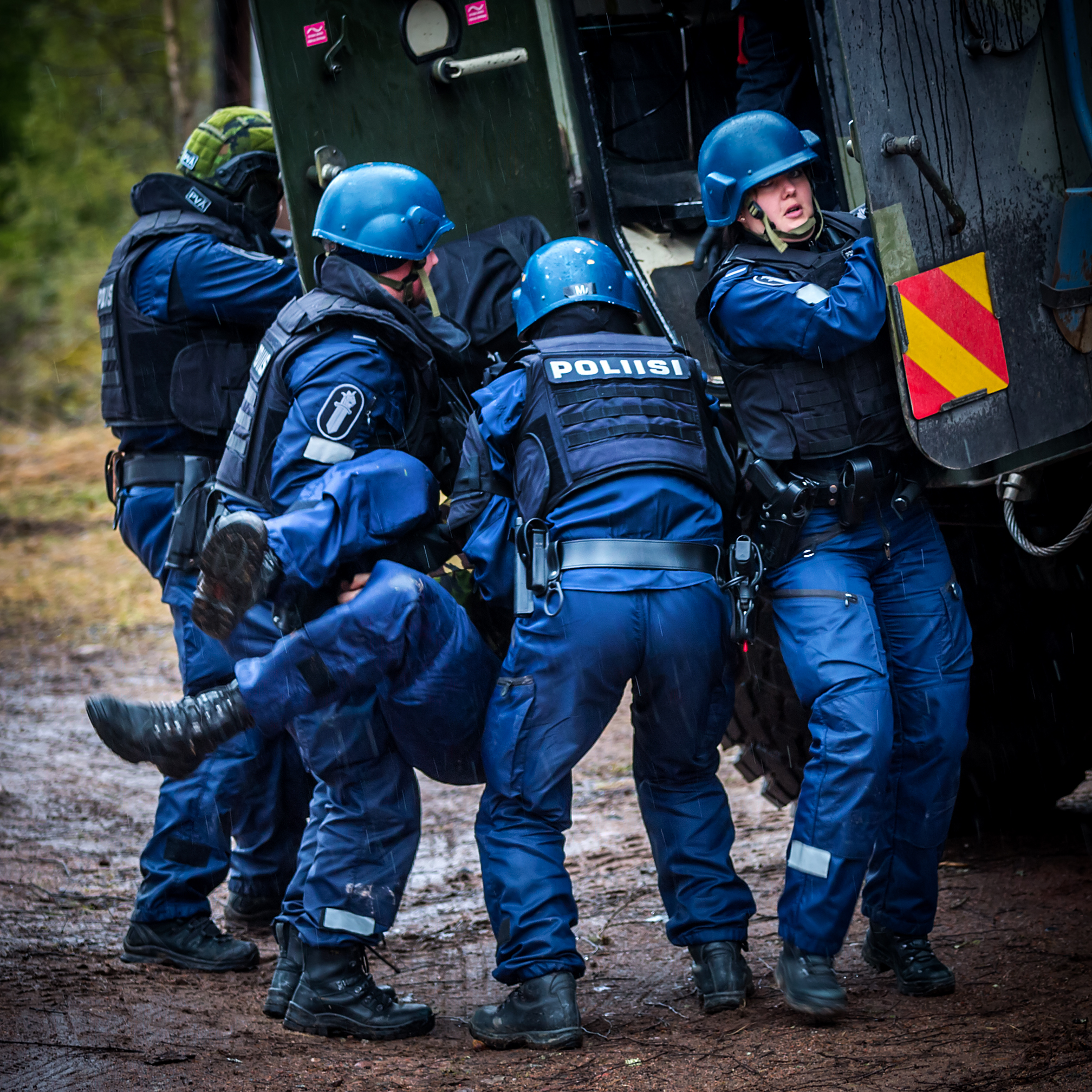
Professional skills can only be upheld through regular training. ©Sami Hätönen.
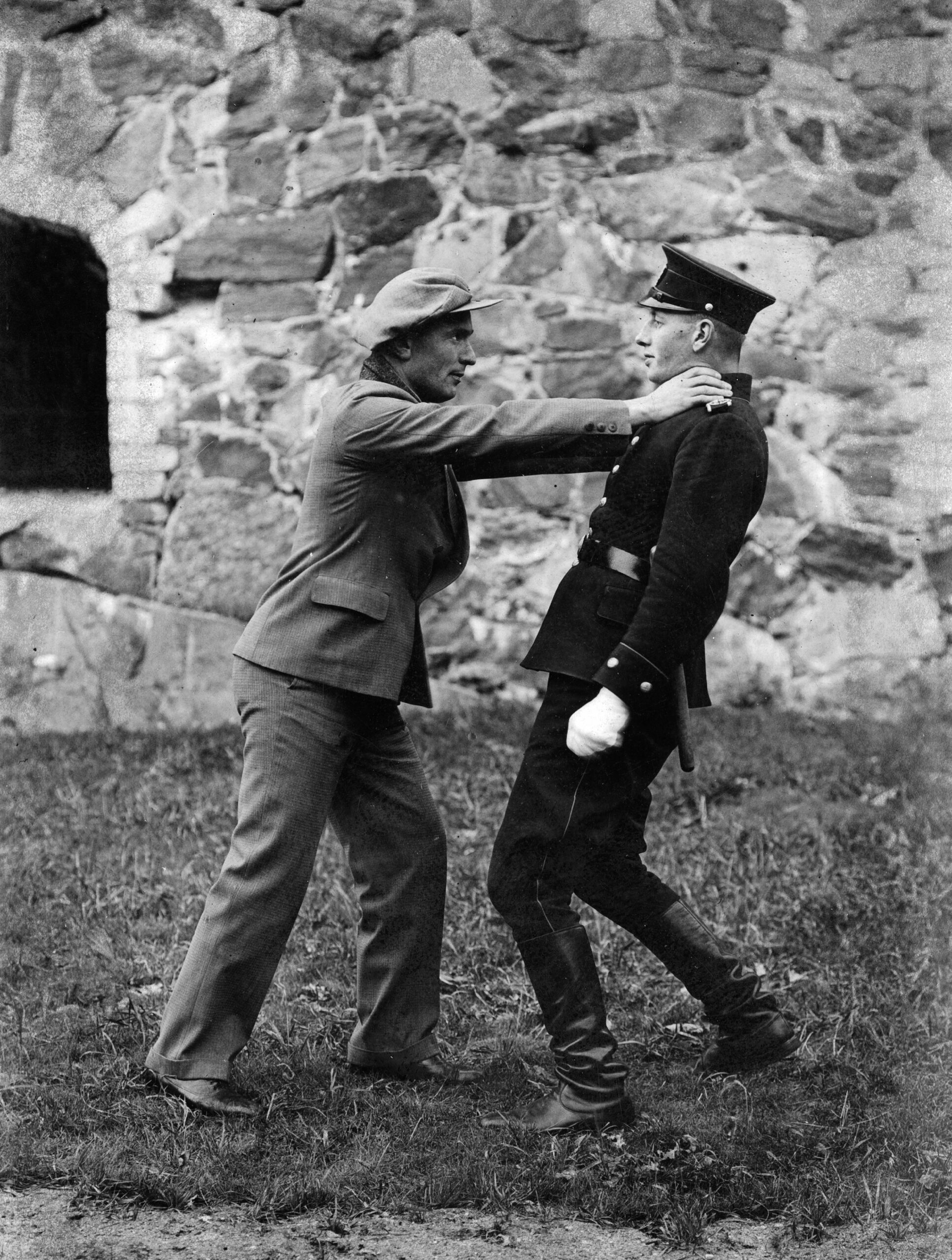
Training scenario at the State Police School in the Suomenlinna sea fortress in the 1920s.
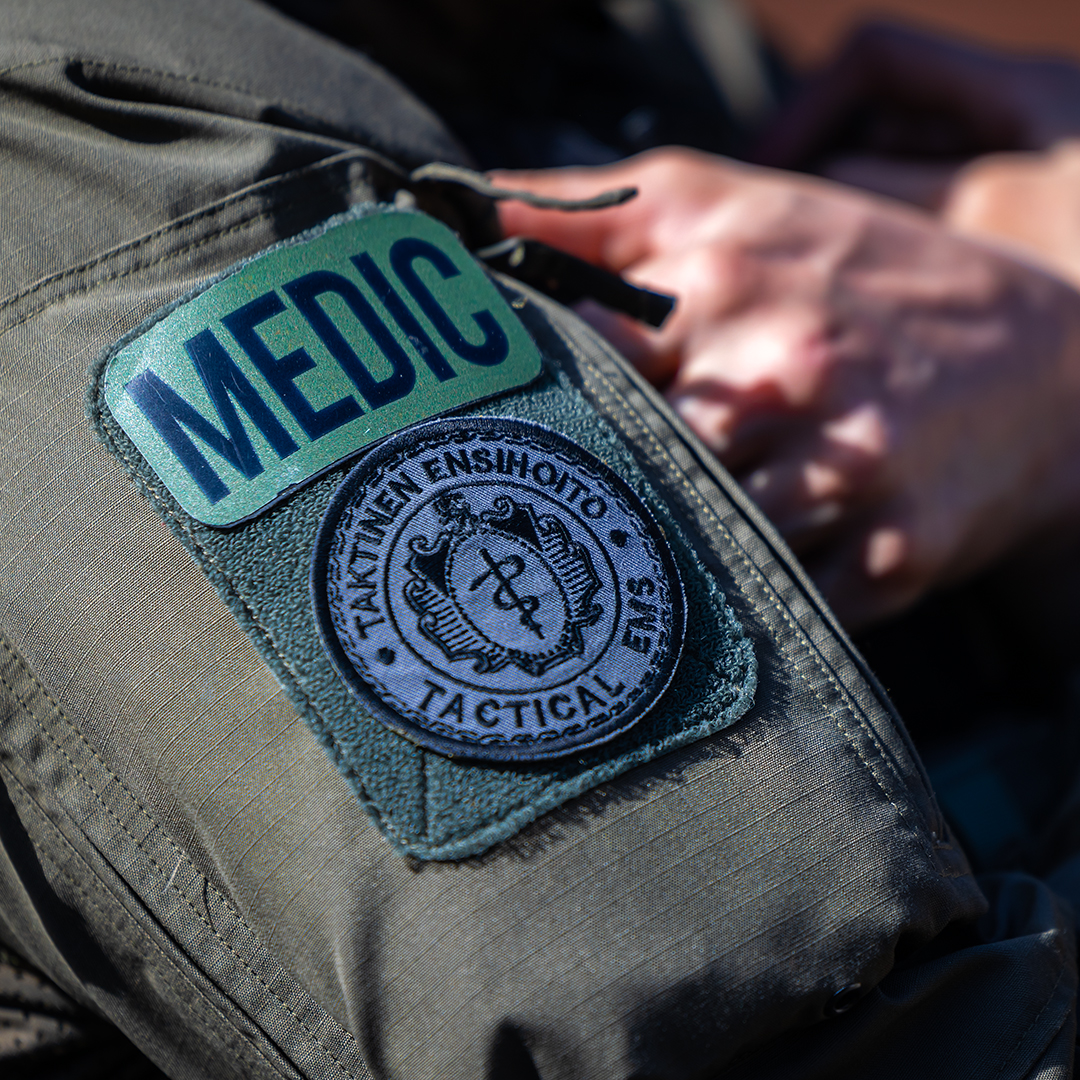
TEMS, that is, Tactical Emergency Medical Support, is an operating model that has been developed to support special police units in high-risk situations such as those involving firearms, explosives and sieges. ©Sami Hätönen.
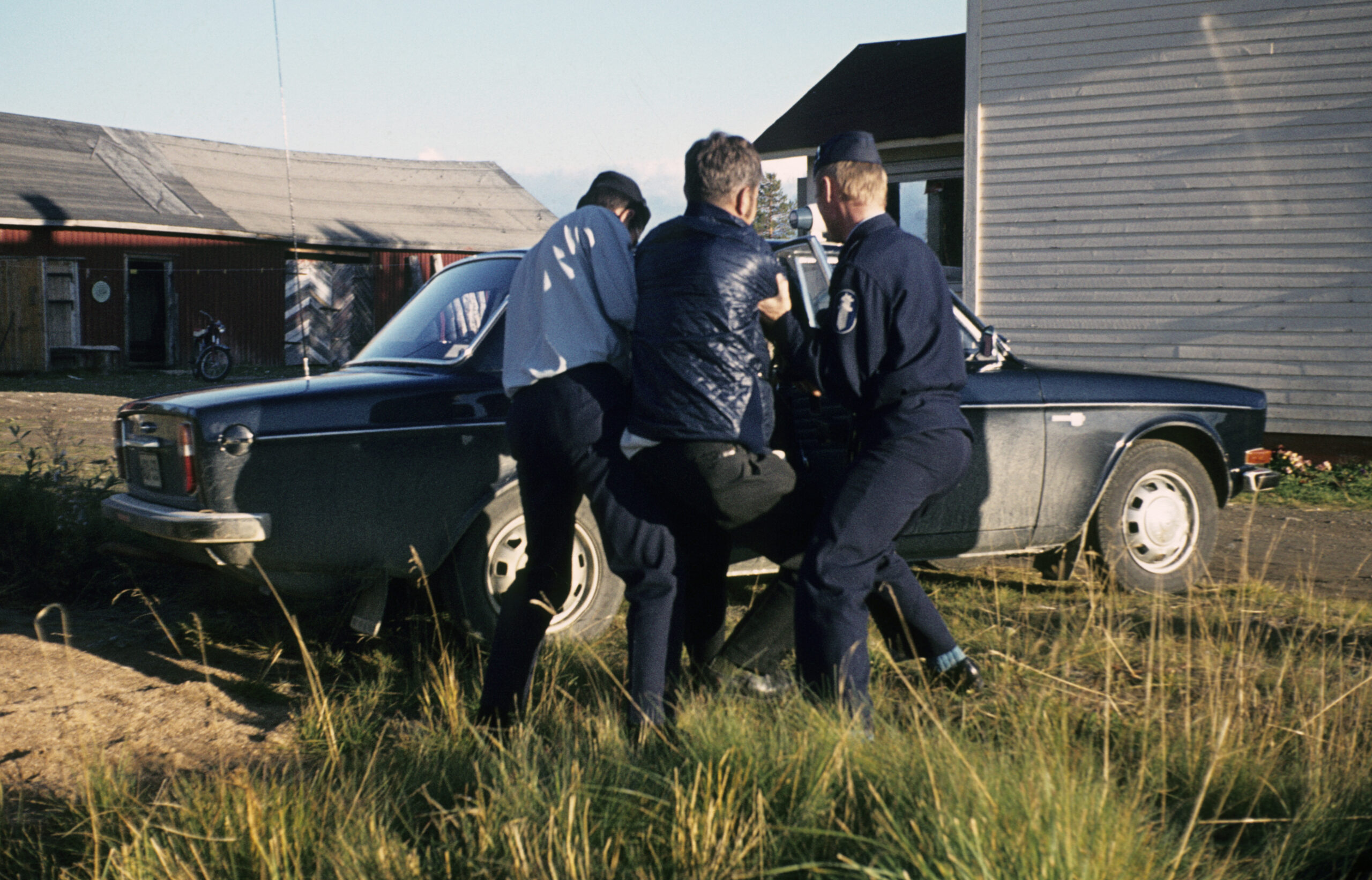
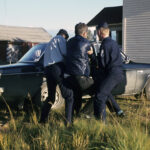
Not everyone is willing to cooperate with the police. Officers arresting a suspect in the 1980s.

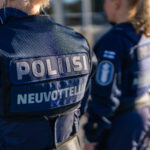
Close-up of two police officers. The words “POLICE” and “NEGOTIATOR” in Finnish are written in white letters on the dark blue vest of one of the officers. The other officer has a Finnish flag and a sword lion police emblem on her sleeve.



The police always go in where no one else dares. If it is nobody’s business, it is our business. Senior Constable Seppo Ijäs, Eastern Uusimaa Police Department
The police, as a public authority, have a duty to safeguard citizens’ fundamental rights. At the same time, they have the power to limit and intervene in the use of those same fundamental rights. An example of this is arrest, which falls within the powers of the police. Arrests are a severe restriction of fundamental rights such as the freedom of movement or the right to personal liberty and integrity. On the flip side, arresting someone may safeguard the fundamental rights of another person, such as the right to life, personal liberty and integrity.
The official in charge of discipline and order
The operating and service models of police work have undergone many changes. Straightforward police tactics that focus on the use of force were commonplace in the early years of Finland’s independence, but social and legislative changes from the 1960s and 1970s onwards transformed police operating models and the image of police work.
For a long time, the police were portrayed as strict, soft-spoken and almost military officers whose most essential task was to maintain discipline and order. “Pointless talk” was seen as nothing more than a distraction and a source of misunderstandings. Strength was what mattered when the police needed to put troublemakers and brawlers in order. The right to use force was seen as deriving from the nature of the work and was not questioned. There was no law on how the police should use physical force. Under the system of government in 1919, the President of Finland had the power to authorise the police to use force. In the Police Decree of 1925, the police were authorised to use the necessary means of force, which were not specifically defined. The Criminal Code of 1932 allowed the police to use “necessary force” if someone threatened to use violence against the police in the course of their duties.
Laws as a basis for the use of force
The duties, rights and tasks of the police were first laid down in the Police Act of 1966. However, this law did not include all the provisions on police powers. For example, arrests were regulated by the Decree on the Implementation of the Criminal Code, and the Police Act did not contain provisions on the use of force. The right to use physical force was introduced in the 1969 reform of the Criminal Code. The word “violence” was replaced by “use of force”, which emphasised the legitimacy of the act in working duties as distinct from illegal violence. The Police Act of 1995 included provisions on powers, including a provision on the use of force, which were missing from the previous act.
The legislation applying to the police has moved from a general mandate to more detailed and comprehensive regulation, with an emphasis on respect for individual rights and fundamental freedoms. At the same time, the powers and tools of the police have adapted to changes in society and criminal phenomena. Under the Police Act (2011), the police have the right, in the course of their duties, to use such necessary force as may be considered defensible in order to break up resistance, remove a person from the scene, effect an arrest, prevent the escape of a person deprived of their liberty, remove an obstacle, interfere with the passage of an unmanned aircraft, or prevent an imminent crime or another dangerous act or event. The law emphasises the police’s responsibility to primarily maintain public order and safety by giving advice and orders. According to the law, the police have the right to defend themselves in the course of their duties.
The purpose of the use of force by the police is to safeguard the performance of their official duties whenever necessary. Their primary goal is to prevent a situation from escalating to the point that force is necessary, if possible, given the nature of the operation and the danger of the resistance. This means that the police may only use force if less drastic means are insufficient or ineffective. The force used must be proportionate to the danger of the situation and the objective that police seek to achieve, and it must not cause any more damage than is necessary. Before using force, the target must be warned, if possible. The use of force must not cause danger or unnecessary pain to the target person if it can be avoided. The defensibility of the police’s use of force is assessed retrospectively, taking into account the importance of the mission, the urgency, the danger of resistance and the available resources.
When using force, the police apply the principle of least harm. If the task is not urgent, the police will not break down the door of an apartment. Instead, they will obtain a key, so they can enter without destroying the door. If the situation demands it, the use of force is permitted in all police duties. The most common situations are police call-outs, but force may also be used to arrest a person.
If the police use too much force, they are committing a crime. In Finland, this is known as an ‘offence in public office’ and is punishable according to the severity of the offence. In cases of suspected assault, the charge is often the violation of public duty and assault. Criminal investigations have been centralised at the National Bureau of Investigation since spring 2024.
Violence against a police officer is a crime
For a long time, police officers considered violence against them to be part of their job, and this perception persists to some extent. Only in the 1980s did the view become widespread that violence against the police was a violation of public decency and the societal system.
According to statistics from the National Police Board, violent resistance of an officer has increased in the 2000s. In the 2010s, around 27% of police tasks involved violent resistance, but in the 2020s, this figure has risen to 38%. Today, the police are increasingly confronted with people using various substances and people with weapons. Violent resistance includes a wide range of acts, such as verbal threats or threats using object, spitting, biting, physical harm or, in the worst cases, harm with a weapon.
| 2003 | 2005 | 2010 | 2015 | 2020 | 2024 | |
| Resistance to a public official | 727 | 857 | 1093 | 1154 | 1145 | 1245 |
| Violent resistance to a public official | 461 | 436 | 413 | 421 | 640 | 795 |
| 1188 | 1293 | 1506 | 1575 | 1785 | 2040 |
Table: Information provided by the National Police Board on resistance and violent resistance to the police
Under the Criminal Code, the use or threat of violence against a public official does not require the official to suffer consequences in order for the offence to be defined as violent resistance. The use or threat of violence is punishable as soon as the act is committed, even if the perpetrator or intimidator does not actually achieve their goal.
Special units for demanding situations
For a long time, police officers were “general police officers”, who handled any task that came their way. The short training provided skills mainly for basic police duties. Today, the police service offers a range of specialisation options, from criminal investigation to public order and security. In particular, units specialising in the use of force, demanding and dangerous situations train regularly. The professional skills base, the emphasis on occupational safety, diverse training, and good tools and equipment have made the police profession much safer.
The fundamental rights of citizens, laws and police principles strongly emphasise the use of the least severe means, even in demanding situations. The police force trains tactical negotiators. Negotiation seeks to stop and resolve conflicts without the use of force, among other things. If a demanding situation arises, a tactical negotiation team is formed to obtain information on the mental state and demands of the target person, among other things, and to report on the evolution of the situation to the situation commander. Negotiators are used in situations involving self-destructive people, entrenchment, conflict and violence, as well as in international missions such as kidnappings. Social media is also part of the operating environment.
In crowd management, the police prepare for crowd behaviour that could threaten public order and safety. Crowd management officers also receive special training on action in the event of crises, natural catastrophes, and national disasters. Finland’s crowd management police aim to minimise their use of force and cooperate peacefully with the crowd. The crowd management team is there to ensure the freedom of assembly and expression of protesters and the smooth running of the event, as well as to minimise any potential harm to the environment and the protest. The team’s special equipment, training, organisation, and disciplined teamwork make it special.
In addition to the Helsinki Police Department, the Karhu Special Intervention Unit operates throughout the country in demanding police situations where special skills and performance are needed that the local police do not have. The Karhu unit is available to assist requesting police forces at no cost to them. The Karhu unit has different operational groups, such as technical, dog and terrorist bomb squads, as well as training and command. The Karhu unit is also used in counter-terrorism and in demanding security arrangements.
Following the school shootings in Jokela (2007) and Kauhajoki (2008), all police units set up Critical Incident Response Teams. Their tasks include preventing and detecting serious crime, maintaining public order and security, and carrying out special operations. The response team is particularly geared towards situations requiring a rapid response and specific expertise. Such situations may include armed violence, hostage situations, terrorist threats or other serious incidents. In addition to the response team, a critical incident may also require the presence of tactical first-aid and negotiation teams and other specialist groups, such as terrorist bomb squads, crowd management teams and the Karhu Special Intervention Unit.
After the Second World War, the Finnish Defence Forces were in charge of defusing explosives. The police took over responsibility for clearing non-military explosives in the 1970s. Today, police officers specialising in terrorist bombs are specially trained in handling civilian and improvised explosive devices, as well as chemical, biological and radiological agents. Every police station in Finland has a terrorist bomb squad.
Training developed significantly in the 2000s. Continuous, regular training ensures that police officers remain up-to-date with developments in their field and can respond to new threats. Common tasks include seizing explosives during searches, confiscations and explosives collections, as well as monitoring the transportation of explosives and the use of explosives on construction sites. In addition to homemade bombs put together by hobbyists, explosives can be found in the possession of professional and habitual criminals. People who are enthusiastic about explosives and suffer from mental disorders are also a specific risk group. International terrorism poses its own serious threat, which brings new challenges for the terrorist bomb squad.